
By Stuart Johnston
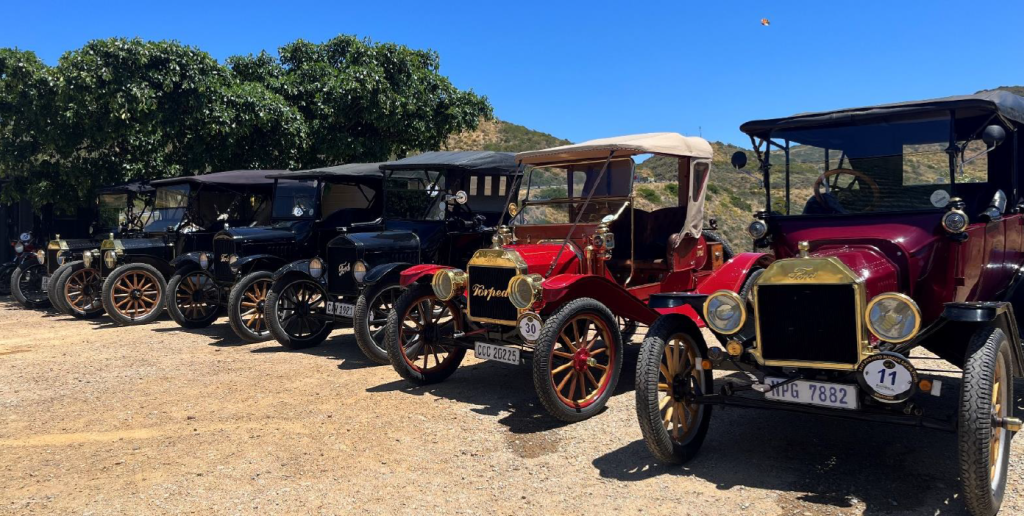
The 2023 ProAuto Rubber Veteran and Vintage Tour took place in sweltering Western Cape weather in early November and drew over 30 car entries and six motorcycles. The tour has been running in South Africa since the mid-1950s when these old cars were mere spring chickens, most of them being less than 30 to 50 years-old back then.
This year, the youngest car was a 1930 Ford Model A at 93-years-old, and the oldest was a 1910 Model T Ford. Do the maths and you realise that this car was 113 years-old, and still going strong in the hands of its ultra-enthusiastic owner, Gerhard Breytenbach, from Polokwane. To qualify as a Veteran car, the manufacturing date has to be 1918 or earlier, while Vintage cars have to be built before December 31, 1930.
It takes serious enthusiasm to source a car from the pioneering days of motoring in South Africa and many of the cars on the tour had been restored from absolute rust-bucket wrecks. Preparing such an old car for a three-day tour also takes serious commitment, not to mention transporting it to the event. Arthur Duvenage, for instance, now in his 80s, towed his 1915 Model T all the way from Pongola in Northern KZN for the event, with his wife Elize supplying flasks of coffee and the like.
Watching Arthur’s Model T haul up the Du Toitskloof Pass on the second day of the event, one was struck by the smooth note of the engine despite the fact that temperatures were heading for 35 degrees C. He later explained that he had recently balanced the old 2,9-litre four-cylinder motor at his home workshop, weighing and machining each connecting rod to specifications way more accurate than Henry Ford had specified over a century ago.
As for top-quality workmanship on a Model T, it was hard to beat the all-wooden pick-up body that Hennie Marx had created for his wife Corné, to be ready just in time for the tour. The couple had hauled the 1918 machine carefully all the way from Bethlehem in the Free State.
There were 16 Model Ts entered for this year’s event, and despite many of them running without water pumps (these “new-fangled” devices were fitted as aftermarket items back in the 1920s) all 16 of the Model Ts finished the event, which totalled over 600 km.
‘It made me very proud,” said Tour organiser Philip Kuschke, as the organising club was the Model T Ford Club of South Africa, and it was important for the Ts to deliver a good show. Philip and his wife Rosita entered their 1915 Model T Runabout, while club president Emil Kuschke and his wife Hannetjie were also in the thick of the action in their 1914 Model T.
Apart from the old Fords (there were a number of pristine Ford Model As entered), there were more than a few super-exotic cars on the tour. Alice van Jaarsveld was driving her 1927 Lancia Lambda Torpedo in her usual press-on style, and revelling in the fact that this car was fitted with four-wheel braking, independent suspension and a monocoque chassis-body construction. The Lambda was the first car to be produced without a separate chassis frame, and also had a revolutionary damping system built into the independent front suspension.
Another innovative car entered was the 1913 Cadillac, run by Richard Middelmann, with his wife Philippa navigating. This was the first car to be fitted with an electric-start system, and Richard explained that it needed about six-steps to activate the battery-powered system, which in turn set in motion all sorts of mechanical devices and a solenoid to crank the giant 6-litre four-cylinder engine into life.
This car was fitted with twin ignition and two plugs per cylinder. The engine is beautiful to behold with its copper individual cylinder water jackets. On Day 1 of the Tour, unfortunately, one of the dual-plug cylinder head inserts blew out, punching a neat hole in the Cadillac’s beautiful bonnet. Undaunted, Richard loaded the car up and headed back to the family’s farm in Botrivier, about 150 km away from the Tour headquarters just outside Paarl. He returned just in time for post-dinner snifters that night with the family’s 1930 Graham-Paige, a beautifully-preserved open-topped Tourer.
Meanwhile Richard’s father Robert and his mother Maryke continued on their unflustered way in Robert’s 1922 Bentley 3-Litre, the 24th car ever made by Bentley, just a year after Bentley began production in 1921. Robert says that the chassis is numbered as the 24th car, but the engine is numbered as the 23rd produced.
The Bentley 3-Litre model would go on to international fame in 1924 and 1927 with famous victories at Le Mans. It was a very advanced car at the time, and Robert says his car, fitted with a more sedate Van den Plas four-seater Tourer body, can cruise all day at 80-90 km/h, thanks to a four-valves-per-cylinder configuration and a five main-bearing crankshaft.
Karl and Tilly Reitz were aboard Karl’s beautiful Van den Plas-bodied 1928 Bentley, complete with a high compression engine, and an ability to cruise all day at 100 km/h or more. This car is bodied along the lines of the famous sporting Le Mans Bentleys and is painted in traditional British racing green. Karl’s late father, Rudi competed in the original V& V Tour back in 1954!
A car that was also considered a cut above the rest in pre-World War Two days was the Hupmobile, and well-known Cape Town collector Leonard Schneider had entered his beautiful 1926 example for this year’s tour. He says that for some reason in the 1920s Hupmobiles gained a very strong following in the Free State area in South Africa. The marque was established by the American Hupp brothers, Bobby and Louis, and produced high-class automobiles from 1909 to 1940. A surprising number of Hupmobiles still survive in South Africa today.
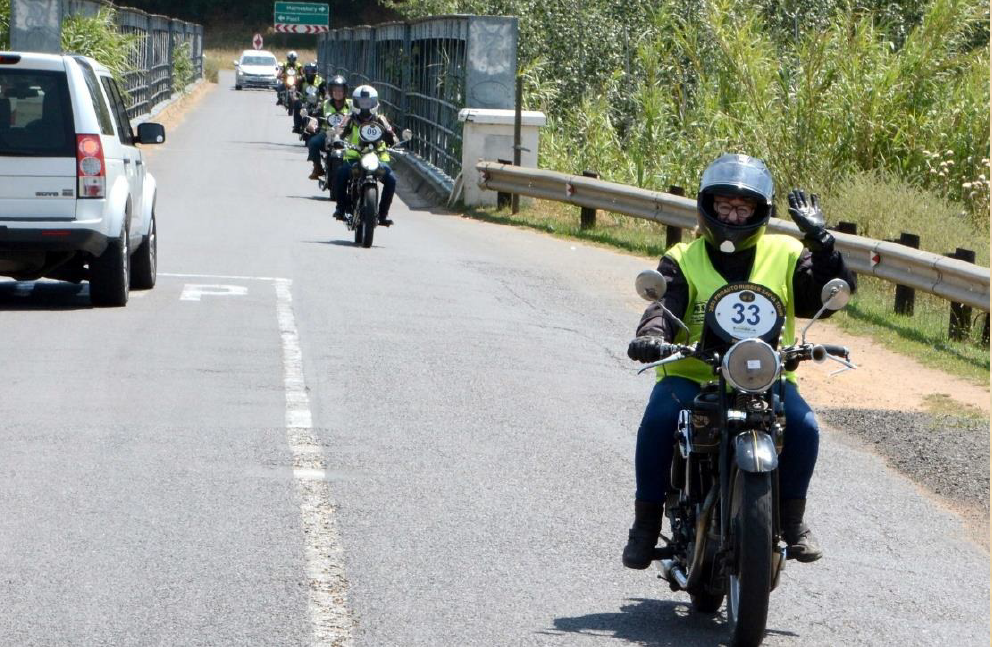
The motorcycles on the tour all had to comply with the DJ Run rules which stipulate that all two-wheelers entered for the commemorative run from Durban to Johannesburg each autumn have to be manufactured before 1936. There were some interesting bikes on tour, notably two ridden by women riders. Bev Jacobs was the most experienced rider with some 25 DJs under her belt on the 1935 Triumph built for her by her father. Benita Palmer had ridden just one DJ on her 1935 Rudge, but she had a flawless V&V Tour in the Cape, aboard her small-capacity machine.
There was an amazing sense of closeness between all the car and bike competitors, and they were always willing to stop and help each other when problems of a mechanical sort occurred over the three days. All but two of the cars finished, and five motorcycles were still running well, Bev Jacobs’ Triumph finally succumbing to a strange ignition malady on the final day.
For me, one of the most interesting vehicles of all was the 1919 Ford Model T pick-up run by Adrian Denness, who happens to live just a few km away from the Paarl tour base. Adrian’s car, converted maybe 60 years or so ago from a Runabout model to a pick-up, has covered over 13 000 km in his hands since he bought it decades ago.
Most of those kilometres have been done on gravel, and one of Adrian’s missions in life is to travel everywhere he can in his Model T on rough dirt roads, which the Model T was designed for. He does only essential maintenance on his car, and just minutes before the start he was seen calmly topping up the oil and water, sort of as an after-thought. As for cleaning and polishing, Adrian leaves that to the other guys.
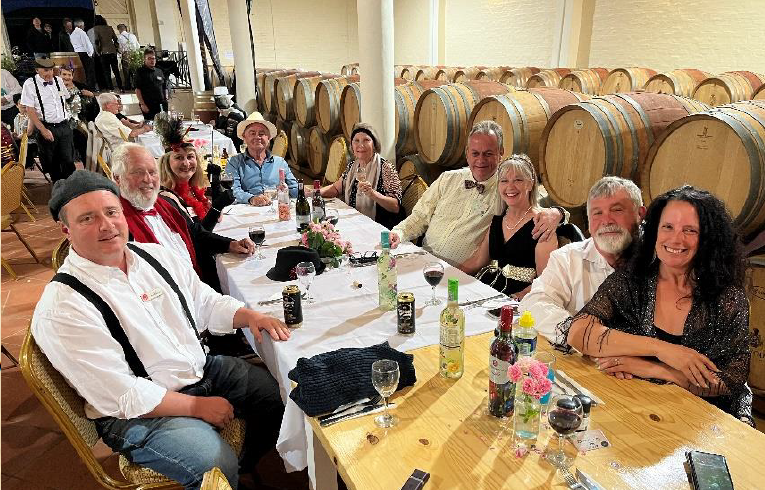
The three-day tour ended on a high note in a wine shed adjoining the Middelplaas Paarl Guest House, where the tour was based. The following are the results of the regularity segments on the tour, as well as special awards for outstanding contributions and performances on the 2023 event:
Regularity results:
1. Neville and Susan Koch, 1928 Ford Model A, 22 penalty points
2. Bill and Juliana Lance, 1926 Ford Model T, 46 penalty points
3. Kevin Casey and Harvey Metcalf, 1911 Ford Model T, 53 penalty points
4. Alice van Jaarsveld, 1927 Lancia Lambda, 84 penalty points.
5. Benita Palmer, 1935 Rudge, 98 penalty points
6. Brian and Beth James, 1916 Dodge, 116 penalty points
Special awards:
Kobus van Jaarsveld Trophy: Alice van Jaarsveld
Erwin Kuschke Trophy: Kevin Casey and Harvey Metcalf
Bob Acton Trophy: Neville and Susan Koch
Liefie Bosch Trophy: Bill and Juliana Lance
Rudi Reitz Trophy: Richard Middelmann
Bettie Richmond Trophy: Alice van Jaarsveld
Dick Osborne Trophy: Benita Palmer.
SOME PHOTOS TAKEN ON THE 2023 PROAUTO RUBBER SAVVA TOUR
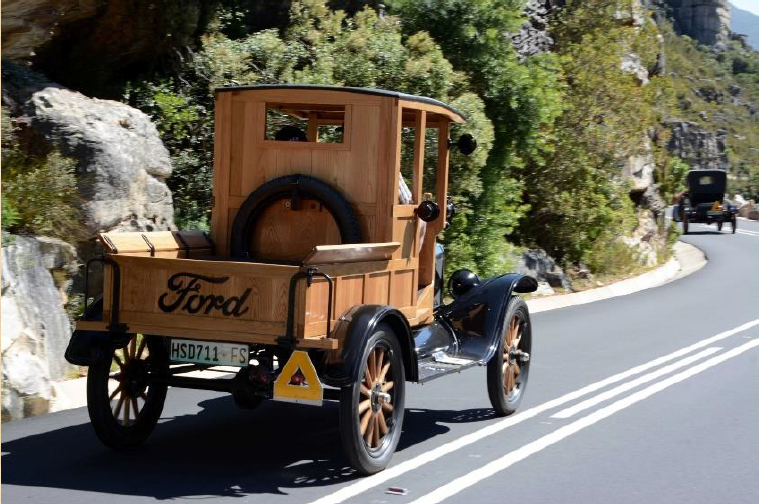
Above left: Hennie Marx’s 1918 Model T Ford pick-up in Bainskloof Pass
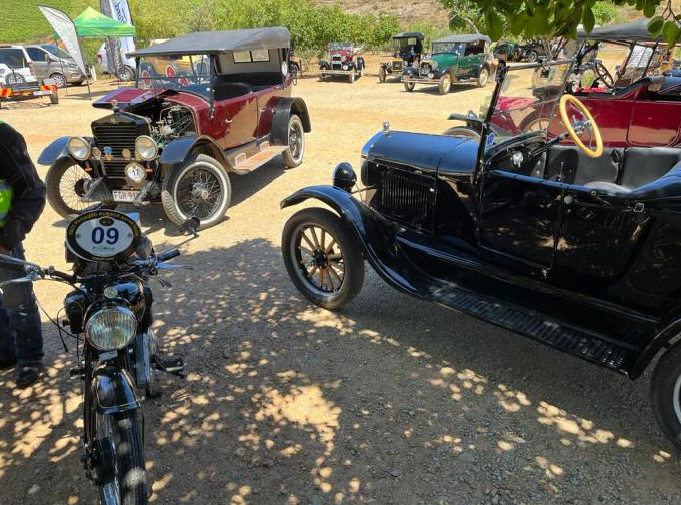
Above right: a beautiful collection of cars and motorcycles at the lunch stop at Eight Feet Village Restaurant on Day 1
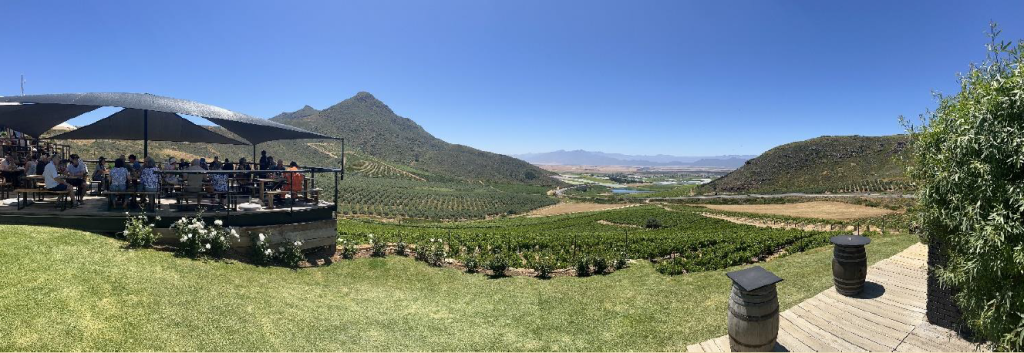
Above: The view over the valley from the Eight Feet Village Restaurant in the Bothmanskloof Pass.
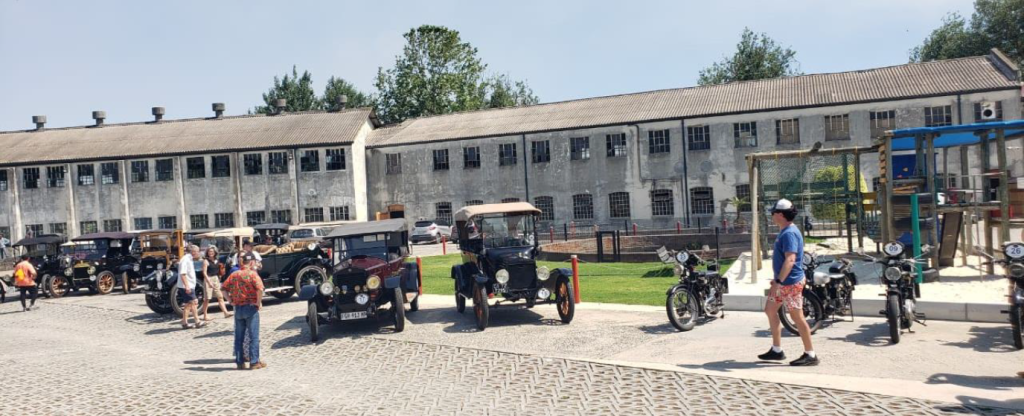
Above: The late afternoon tea stop at the Old Tannery in Wellington on Day 1.
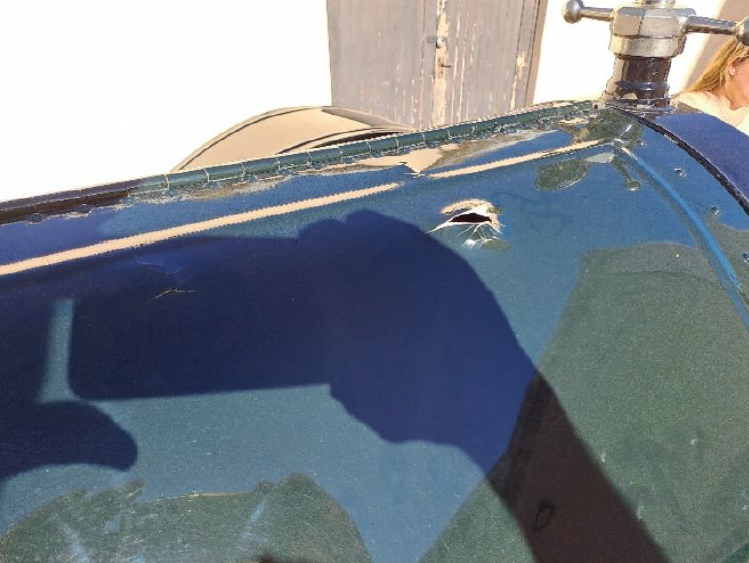
Left: Richard Middelmann’s Cadillac suffered a blow out of the spark plug cap leaving a hole in the bonnet. Undeterred, he took the car home and swopped it for a 1930 Graham Paige to complete the tour.
Right: A line up of DJ motorcycles that participated in the tour.
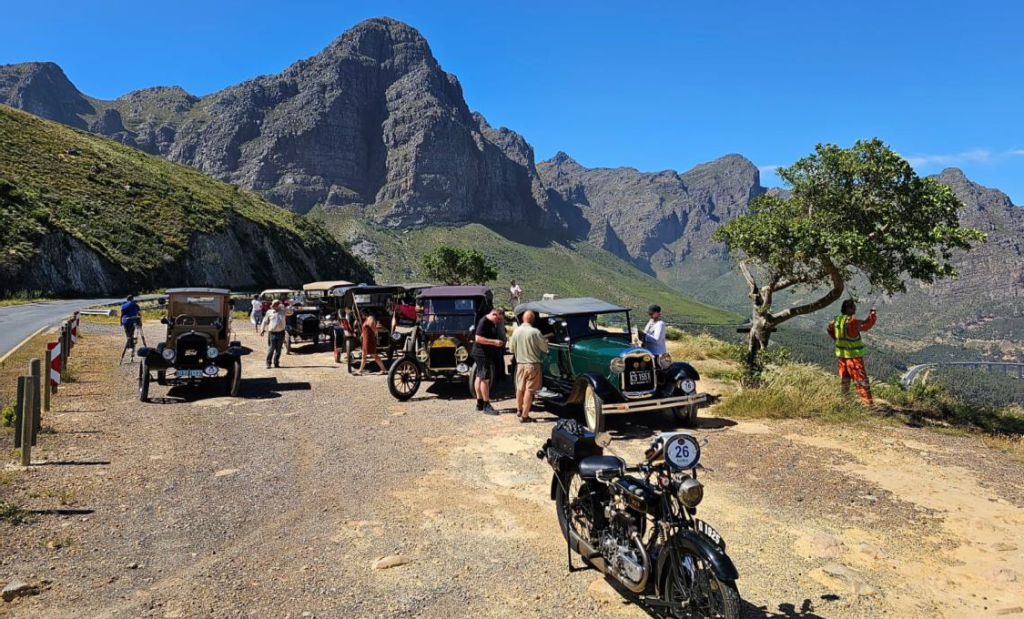
Above: A stop for a photo shoot on the Du Toitskloof Pass on Day 2. The pass was traversed in both directions on this day.
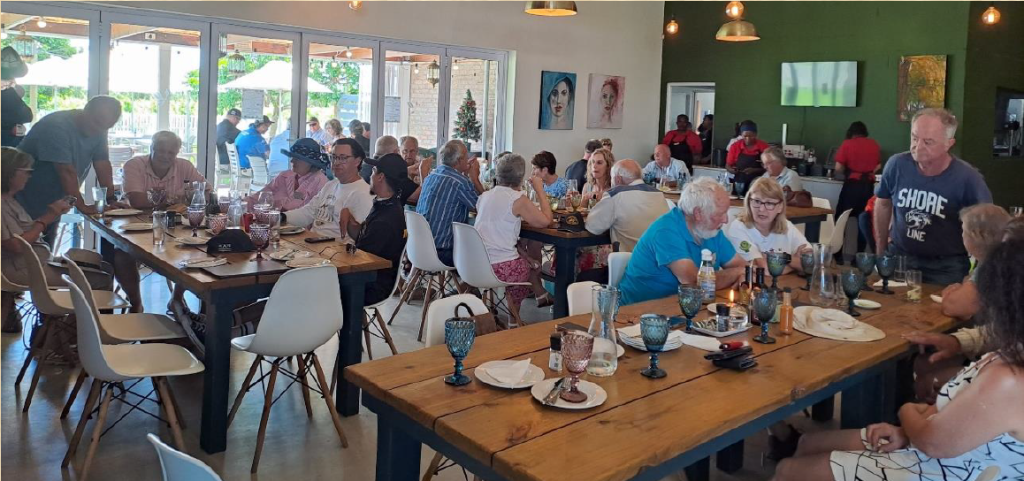
Above: Participants enjoying lunch at the Ou Stokery just outside Rawsonville on Day 2.
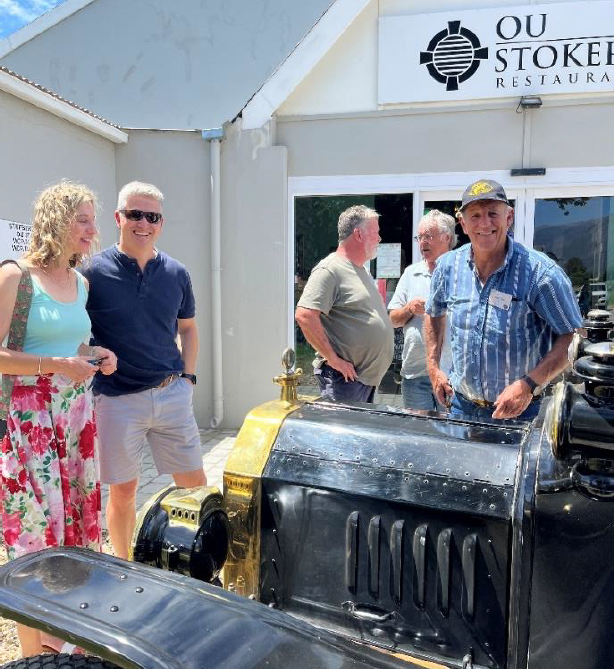
Right: The public enjoyed seeing the cars out and about. Participants and the public ‘s smiles were about the same size.
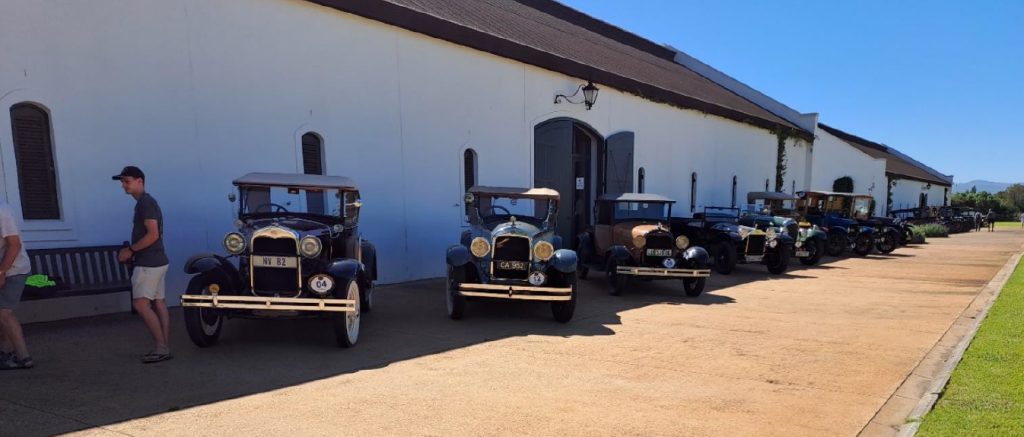
Above: The cars were allowed into the courtyard of the Franschhoek Motor Museum.
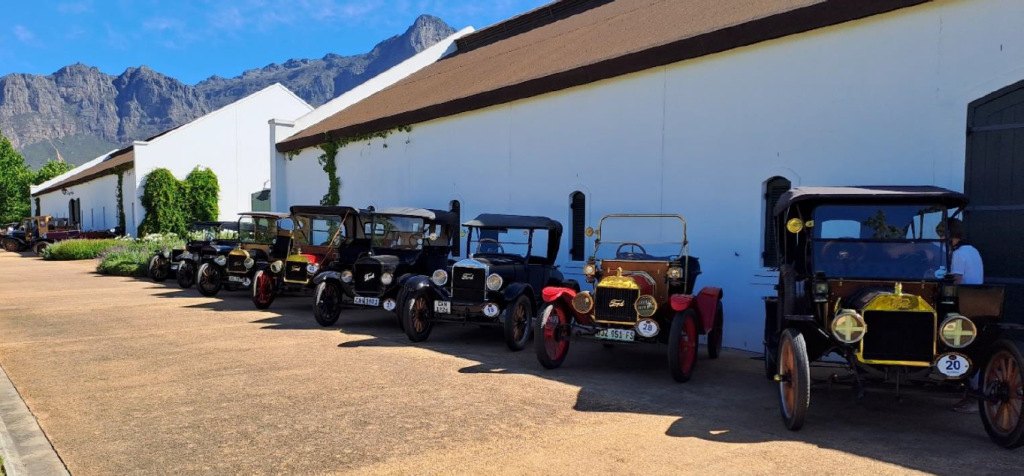
Above: The cars in the courtyard of the Franschhoek Motor Museum.
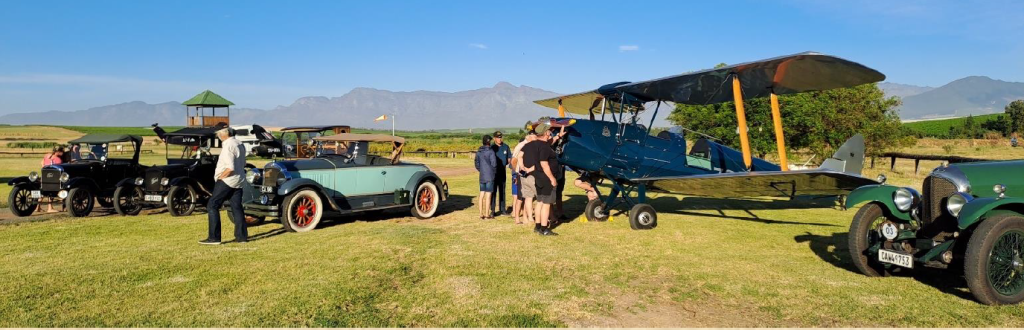
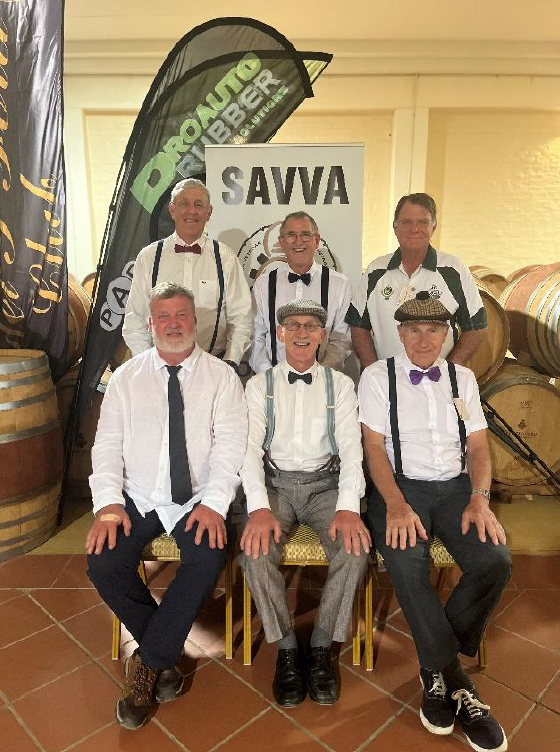
Above: The organising committee for the 2023 ProAuto Rubber SAVVA Tour.
Below: The fancy dress gala evening to end the tour.
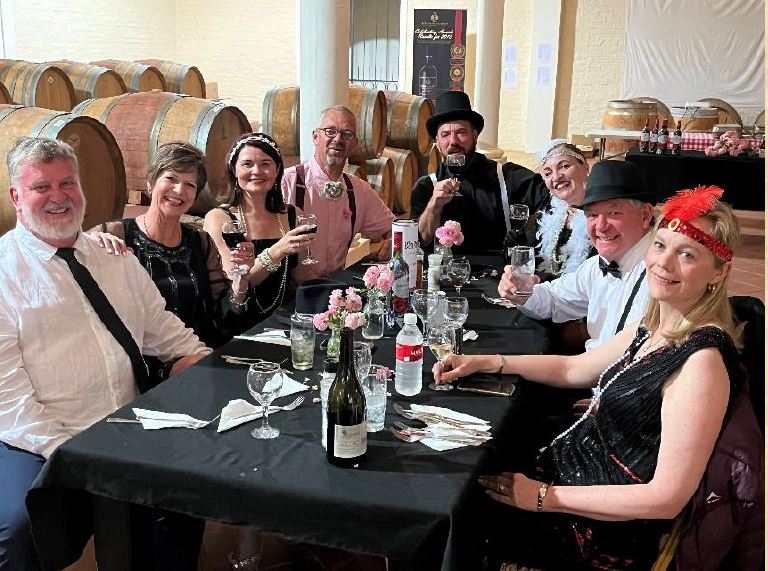
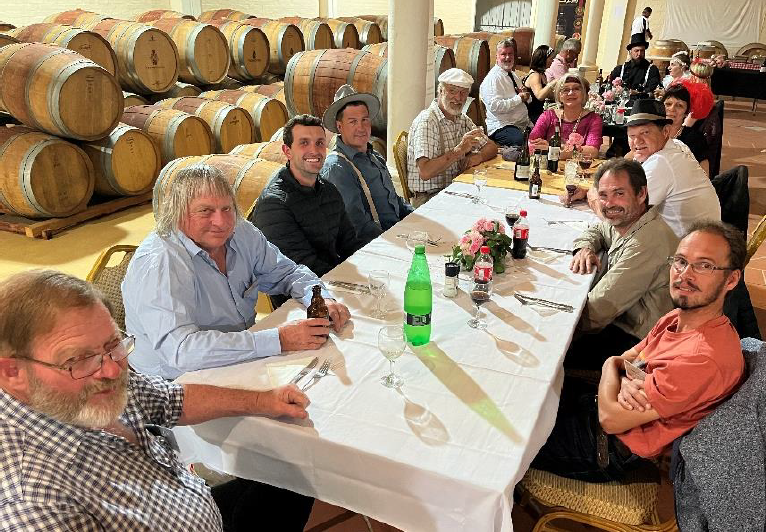
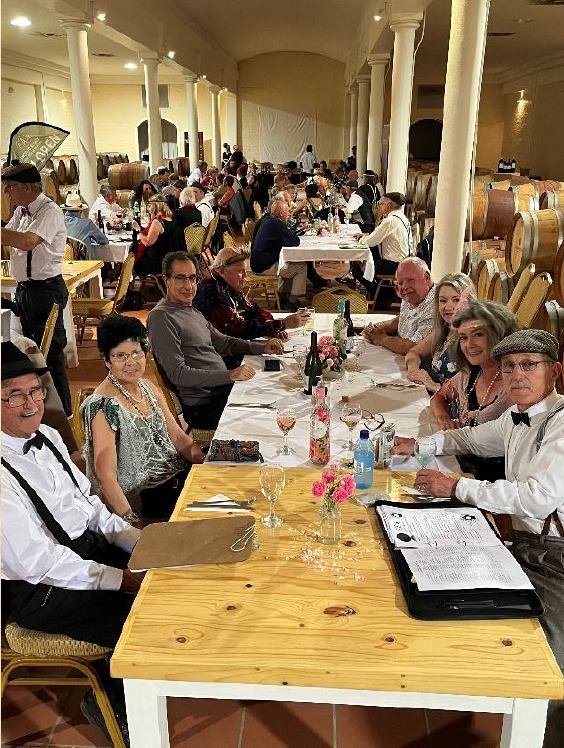
Below: The organising committee for the 2023 ProAuto Rubber SAVVA Tour.
A special Thank You to all our sponsors, without whom this would not be possible.
